
Why South Africa Is Becoming Increasingly Challenging for Foreign Founders
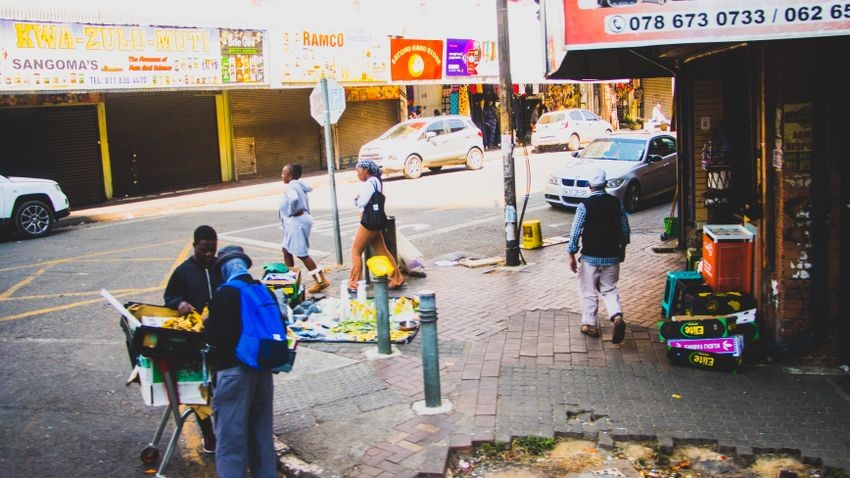
South Africa is the most industrialised economy on the African continent. It has a developed financial sector, a large consumer market, and a legal system with genuine protections on paper. Foreign founders have been drawn here for decades.
But what is happening on the ground, particularly for small and micro-business operators, tells a different story. This post is not about multinationals navigating B-BBEE scorecard mechanics. It is about what foreign entrepreneurs, especially those running spaza shops, retail businesses, restaurants, or service operations in townships and urban areas, are facing in 2025 and 2026. The data is sobering.
1. Xenophobia Is Not a Background Risk; It Is an Active, Documented Threat to Foreign Businesses
Between 1994 and March 2024, xenophobic attacks in South Africa resulted in 669 deaths, 5,310 looted shops, and 127,572 displacements, according to Witwatersrand University's Xenowatch database. These are not historical footnotes. The pattern continues, and it has intensified.
In April and May 2026, a citizen-led anti-immigration movement called March and March organised demonstrations in Pretoria, Johannesburg, and Durban targeting foreign-owned shops and businesses. The protests turned violent. Human Rights Watch documented multiple cases, including a 43-year-old Cameroonian shop owner in Durban who had lived in South Africa for nearly 20 years. Affiliated with the protest movement, a group of approximately ten men broke down his shop door during the April 17, 2026 demonstrations and demanded to know whether he and the women inside were South African. He told HRW he believed the attackers were affiliated with March and March.
Ahead of these protests, some shop owners in Durban who feared looting had shuttered their businesses entirely before the marches even began, a rational decision that nonetheless represents direct economic harm to a foreign-run business, with no compensation and no recourse.
The pattern is not new. Operation Dudula, a vigilante movement-turned-political party whose name means "push out" in Zulu, has been conducting operations against foreign-owned businesses since 2021. Its members have closed down foreign shops, blocked the children of foreign nationals from entering public schools, and in 2025, blocked a one-year-old Malawian boy from accessing treatment at two local government clinics in Alexandra because the family lacked a South African identity card. The child died. The Economic Freedom Fighters subsequently lodged a murder charge against Operation Dudula.
In November 2025, the South Gauteng High Court granted an injunction against Operation Dudula, prohibiting its supporters from blocking migrants' access to healthcare. The case, brought by civil society groups in 2023, only reached court in June 2025. The injunction confirmed the legal principle. It has not stopped the attacks.
The African Commission on Human and Peoples' Rights issued a formal statement in April 2026 calling on the South African government to conduct impartial investigations, ensure accountability, and dismantle vigilante groups. The United Nations Secretary-General also expressed concerns on April 27, 2026. None of this has materially changed conditions on the ground.
2. Public Attitudes Have Reached Their Most Hostile Level on Record
It is important to understand the social context that shapes the environment for foreign business owners because public sentiment directly enables or restrains vigilante behaviour.
The 2025 Human Sciences Research Council Social Attitudes Survey found that South Africans were more hostile towards immigrants than at any point previously measured. Only 15% of adults said they would welcome all foreigners. 42% said they would welcome no immigrants at all. A 2018 Pew Research poll had already found that 62% of South Africans believed immigrants were a burden on society by taking jobs and social benefits, and that 61% believed immigrants were more responsible for crime than other groups.
Afrobarometer data from 2025 found that 7 out of 10 (69%) South Africans perceived immigrants' economic impact as negative, despite research showing that each immigrant worker creates roughly two jobs for South African citizens. 85% of Afrobarometer respondents favoured reducing or eliminating refugee entry.
These attitudes have hardened fastest among poorer and working-class communities in Mpumalanga, Gauteng, Limpopo, and KwaZulu-Natal, the very provinces where most informal and township business activity takes place. A foreign founder establishing a business in these areas is not entering a neutral market. They are entering one where the majority of surrounding community members actively distrust their presence.
Since 2024, South Africa's unemployment rate has exceeded 43%, according to Human Rights Watch. In this environment, foreign nationals operating visible businesses, especially small shops selling goods at competitive prices, are direct targets for economic resentment, organised harassment, and physical attack.
3. The Spaza Shop Crackdown: When a Tragedy Became a Regulatory Weapon
In October 2024, six children in South Africa died after consuming snacks purchased from local spaza shops, small informal convenience stores, many of which are foreign-owned. Investigations traced some deaths to pesticides and organophosphates, including Terbufos and Aldicarb, sold in informal markets. The government identified the shops themselves as the problem, leading to a national regulatory crackdown that overwhelmingly targeted foreign-owned businesses.
On 15 November 2024, President Ramaphosa announced that all spaza shops and food-handling businesses had 21 days to register with their respective municipalities or face fines, closure, or prosecution. Foreign nationals were specifically required to produce a valid business visa, asylum permit, or permanent residency permit, documents that can take months to process through the Department of Home Affairs, known for its backlogs.
Dr Daniel Fikreyesus, representing foreign spaza shop owners through the ANGGA organisation, appealed directly to Ramaphosa: "Since the day we heard this news, we have been trying to fulfil all the documents required. The time limit is so short, 21 days to get something that you have never had." The deadline was extended, first to 17 December 2024, then to 28 February 2025. No further extensions were offered.
The compliance numbers reveal just how difficult the requirements were to meet. In Tshwane alone, 4,222 applications for spaza shop registration were received by the end of February 2025. Only 192 met the registration criteria, a pass rate of 4.5%. Across South Africa, municipalities reported that registration processes were confused by conflicting departmental responsibilities, manual systems, and incomplete municipal infrastructure.
Experts raised pointed concerns. Trade Intelligence Senior Analyst Tshegofatso Modise argued the real issue was not the shops themselves but illicit pesticides entering through weak port controls, suggesting the crackdown was solving the wrong problem at the cost of foreign micro-entrepreneurs. The underlying spaza shop sector is not marginal: Trade Intelligence estimates the sector at approximately R197 billion in 2023, with around 150,000 stores serving more than 11 million South Africans. More than 60% of those stores are foreign-owned.
Operation Dudula immediately seized on the registration drive as cover for its campaign to drive foreign nationals out of the spaza economy. Zandile Dabula, the movement's leader, was explicit at a November 2024 protest at Jabulani Service Centre in Soweto: "We don't want them to register their spaza shops. This space must be reserved for South Africans."
The government simultaneously warned that "fronting", where a South African citizen registers a business on behalf of an undocumented foreign national, was a criminal offence under Section 42 of the Immigration Act, punishable for both the foreign national and the South African assistant. This effectively removed one of the few workarounds that informal foreign entrepreneurs had used to keep their shops open.
4. New Labour Laws Are Tightening the Screw
The regulatory pressure on foreign business owners has been compounded by legislative changes designed not just to regulate but to restrict.
In early 2026, President Ramaphosa warned all businesses hiring undocumented foreign nationals that they faced imprisonment or hefty fines under the Immigration Act. The Department of Employment and Labour announced that 10,000 additional labour inspectors would be deployed. In the prior enforcement period, 68 employers had been arrested and paid fines, and 322 employees were arrested and processed through immigration requirements.
The Employment Services Amendment Bill empowers the Minister to set maximum quotas for foreign nationals in specific sectors, including hospitality, construction, and agriculture. The National Labour Migration Policy, approved in 2025, explicitly prioritises South African citizens and permanent residents for employment and restricts foreign employment to specific skills.
For a small foreign founder who needs to employ staff from their own community, or who relies on community networks of co-nationals common in informal economies, these quotas create direct legal exposure. The combination of aggressive inspections and community-level vigilante pressure means the operating environment for foreign-owned small businesses has become simultaneously more dangerous from the street and more exposed to the state.
5. Access to Business Support Is Blocked
The barriers for foreign micro-entrepreneurs extend into the business support ecosystem. Research published from Cape Town found that government agencies supporting SMMEs, including agencies of the Department of Trade and Industry, do not accommodate immigrant-owned businesses as beneficiaries, despite evidence that immigrant entrepreneurs provide employment for locals.
The same research found that for African foreign entrepreneurs operating micro-enterprises, the challenges were layered: xenophobia and intermittent violence, difficulty obtaining start-up and growth funding, inability to access formal business locations at affordable rents, limited language access to legal and regulatory information, and competition crowding from other businesses in the same market with no differentiation support.
None of these is a small inconvenience. They describe a structural exclusion from the formal support systems that a South African entrepreneur starting the same business could access. A foreign founder building a small business in South Africa is not competing on the same terms; they are competing with one hand tied behind their back and periodic threats of physical violence.
6. The Broader Regulatory Backdrop Still Applies
Even setting aside xenophobia and the spaza crackdown, the formal regulatory environment creates significant friction for small foreign founders:
Business Visa requirements set a minimum capital investment of R5 million (approximately $270,000) and require at least 60% South African staffing. Over the four years from April 2021 to March 2025, the Department of Home Affairs received only 435 business visa applications in total, less than 1% of all visa applications. The government's own White Paper acknowledges the system is not attracting sufficient investors.
Currency risk is structural and significant. The rand weakened by 38.6% against the US dollar between 2014 and 2024. For a founder converting home-currency savings into rand for a South African business venture, this means the effective purchasing power of their capital erodes in real terms over time.
South Africa's corporate tax rate of 27% is among the highest in emerging economies. The country also operates high personal income tax rates, with the top band at 45%. For a founder-operator taking a salary from their own small business, this is a material cost.
Crime beyond xenophobia is a documented operational constraint. The US State Department's Investment Climate Statements consistently list violent crime as a challenge to investment. South Africa has one of the highest murder rates in the world. Foreign nationals in townships are specifically identified in academic research as being targeted by criminals who perceive them as unlikely to report offences to police, a perception that has a historical basis given documented hostility toward foreigners by police and Home Affairs officials.
What a Small Foreign Founder Actually Faces in South Africa
If you are a foreign founder looking to open a retail business, food outlet, services business, or small operation in a township or urban South African market in 2026, here is what the data says you are walking into:
A public where 73% report not trusting African foreign nationals at all or very much. A vigilante movement, with political party ambitions, that has closed down foreign-owned shops, blocked healthcare access for migrants' children, and organised violent marches in major cities as recently as April and May 2026. A government registration crackdown on the informal sector that produced a 4.5% approval rate in some municipalities and gave organised anti-migrant groups additional political cover. New labour laws that restrict your ability to hire from your own community. No access to the formal SMME support system. A business visa bar set at R5 million. And a currency that has lost almost 40% of its value against the dollar over ten years.
None of this means South Africa is impossible for foreign founders. Some foreign entrepreneurs have built successful businesses here over many years, and some sectors, particularly in tech, professional services, and formal market retail, operate with less direct exposure to the pressures described above. The FATF exit in October 2025, ongoing energy reforms, and the immigration improvements under Minister Schreiber are genuine positive signals for the longer term.
But the honest picture, backed by the data, is that South Africa has become one of the more difficult countries on the continent for a small or micro-scale foreign founder. The combination of hostile public sentiment, organised vigilante violence, targeted regulatory crackdowns, and structural exclusion from business support makes it a market that requires far more than a good idea and an ability to incorporate a company.
Anyone planning to enter should have a specific plan for each of these risks, not just the regulatory ones, and should read the May 2026 Human Rights Watch report on the new waves of xenophobic attacks before they commit capital.