
Setting Up a Food & Beverage Business in Singapore
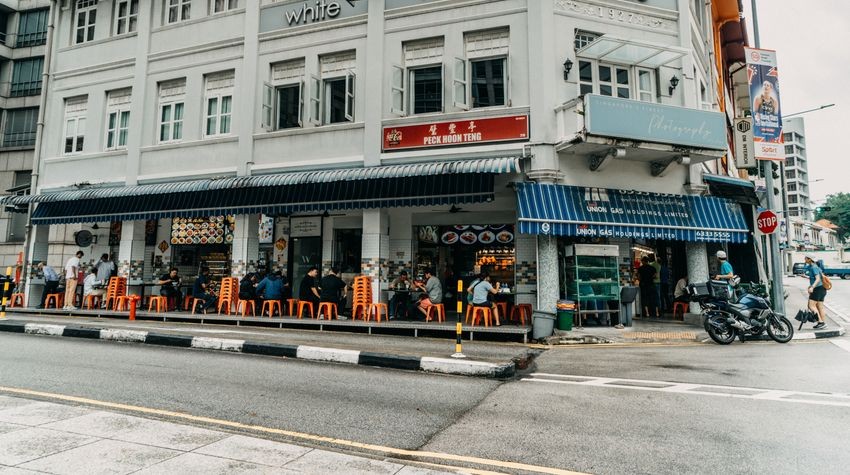
Singapore's F&B licensing system is built around a single regulator, the Singapore Food Agency (SFA), which makes it structurally simpler than markets like the UAE, where trade licensing and food safety approval sit with entirely separate authorities. But "simpler regulator" doesn't mean "light regulation": SFA's licensing conditions are detailed, premises inspections are strict, and the franchise legal landscape here works on the opposite logic from most other jurisdictions, one worth understanding before you assume familiar rules apply. Here's the real breakdown.
The Core Structure: One Regulator, Multiple Licence Types
Unlike the UAE's dual-track (commercial licence + separate municipal food permit), Singapore consolidates food business licensing under the SFA, issued via the GoBusiness Licensing portal. But which specific licence you need depends on your
business model:
|
Licence type |
Covers |
|
Food Shop Licence |
Standalone food/beverage retail premises (restaurants, cafés) |
|
Food Stall Licence |
Stalls within hawker centres, food courts, coffeeshops, or temporary fairs |
|
Licence to Operate a Food Processing Establishment |
Manufacturing, preparing, or processing food for wholesale distribution |
|
Catering Licence |
Food prepared and delivered for events and corporate functions |
|
Cold Store Licence |
Wholesale storage of meat and seafood requiring temperature control |
|
Supermarket Licence |
Retail food businesses selling raw meat and seafood, among other categories |
A meaningful distinction most guides skip: a Food Stall Licence prohibits hiring foreign workers; only Singapore citizens and PRs can staff a stall-licensed operation. A Food Shop Licence, tied to a standalone premises and registered to a company (not an individual), allows foreign worker hiring, subject to separate Ministry of Manpower approval. If your business model depends on foreign staff, the licence category you choose determines whether that's even possible, not just how you're taxed or where you can operate.
The Application Sequence and Why Order Matters
Singapore's process is sequential in a way that punishes founders who commit to premises too early:
- Incorporate your company with ACRA first. You cannot apply for a Food Shop Licence as an individual if you intend to hire foreign workers; it must be registered to a UEN-holding company.
- Secure planning approval before signing your lease. If your premises weren't previously used as a food shop, you need a Change of Use approval from the Urban Redevelopment Authority (URA) or from the Housing & Development Board (HDB) if it's HDB-managed premises. SFA requires this approval letter as part of your licence application, not as an afterthought.
- Submit your SFA application with a layout plan via GoBusiness, using SingPass/CorpPass.
- Receive an In-Principle Approval (IPA); only after this can you legally begin renovation and fit-out according to the approved layout.
- Complete renovation exactly to the approved plan. SFA inspectors are strict here: moving a sink or exhaust hood without prior approval can fail your inspection and trigger costly re-renovation.
- Pre-licensing inspection, either virtual (via a booked video slot) or photo submission, depending on what SFA specifies in your IPA letter.
- Licence issued upon approval, with payment due within 28 days of notification.
- The single most costly sequencing mistake: signing a lease or starting renovation before URA/HDB Change of Use approval and SFA's In-Principle Approval are in hand. Documentary requirements not fulfilled within 2 months cause SFA to close the application entirely, requiring a fresh start.
Real Costs and Timelines
Food Shop Licence: approximately S$195 per year, renewed annually, a genuinely modest government fee compared to markets like the UAE.
Food Safety Course certification for food handlers: roughly S$150 per person, mandatory for anyone handling food (WSQ Food Safety Course Level 1 at minimum).
Category 1 establishments (larger restaurants, caterers) must additionally appoint an Advanced Food Hygiene Officer, trained to Level 4 under the current SAFE framework, a staffing requirement smaller operators don't face.
If your renovation involves structural changes, expect additional permits from the Singapore Civil Defence Force (SCDF) and Building and Construction Authority (BCA), on top of URA/HDB and SFA.
Additional Licences Your F&B Business May Also Need
Depending on your concept, budget for these alongside your core SFA licence:
Tobacco Retail Licence: required if selling tobacco products (vaporisers are also captured under the Tobacco and Vaporisers Control Act from May 2026)
Public Entertainment Licence: required for live music, performances, or karaoke
NEA Noise Permit: for outdoor events or amplified music above set noise limits
Copyright Licence (COMPASS): required for playing background music, radio, or recorded music in customer-facing areas, a licence many small F&B operators simply don't know exists until enforcement catches up with them
Tax and GST Thresholds Specific to F&B
Singapore's corporate tax rate is a flat 17%, with a partial exemption for qualifying new companies: 75% of the first S$100,000 of chargeable income and 50% of the next S$100,000 exempt in the first three years, a genuinely material benefit during the low-margin early phase most F&B businesses go through.
GST registration becomes mandatory once taxable turnover exceeds S$1 million in any rolling 12-month period. For a functioning café or restaurant, this threshold is commonly reached within the first year or two; plan for it rather than being caught by it.
Once GST-registered, standard-rated supplies (food and beverage sold on-premises) are charged at 9%, with quarterly filing.
From April 2026, new voluntary GST registrants must also comply with InvoiceNow e-invoicing requirements, a compliance layer easy to miss if you register voluntarily rather than being pushed over the mandatory threshold.
Foreign Ownership: Straightforward at the Company Level
Unlike the UAE's facility-category-dependent healthcare ownership rules or its mainland/free-zone F&B distinction, Singapore F&B ownership is comparatively simple: a Private Limited Company can be 100% foreign-owned, with no local shareholder requirement, consistent with Singapore's general company law. The constraint isn't on ownership; it's on staffing (the resident director requirement covered in our Singapore tech licensing piece still applies) and on the licence category's foreign-worker rules described above.
The Franchise Question: The Opposite Structure From the UAE
This is where Singapore diverges sharply from the UAE model covered in our companion piece, and it's the detail most "start a franchise in Singapore" content glosses over entirely.
Singapore has no franchise-specific legislation at all. Not even the commercial-agency overlay that shapes UAE franchising. There is:
- No franchise disclosure law (no equivalent to the US FDD)
- No franchise registration requirement
- No regulator-mandated pre-sale disclosure obligation
Franchise relationships in Singapore are governed entirely by general law: contract law, the Trade Marks Act, the Competition Act 2004, the Unfair Contract Terms Act, and the Consumer Protection (Fair Trading) Act. The word "franchise" barely appears as a defined legal concept outside a few unrelated statutes (e.g. the Resource Sustainability Act's packaging rules for businesses over S$10 million turnover).
The Franchising and Licensing Association of Singapore (FLA) publishes a Code of Ethics that includes disclosure requirements, minimum notice periods, and fair-dealing standards, but it only binds FLA members. It's a useful voluntary framework, and sophisticated franchisors follow it even without membership, but it carries no legal force for the many franchise relationships operating outside it.
What this means practically:
- Your franchise agreement is, even more than in the UAE, your entire legal protection; there's no statutory disclosure regime or registration process acting as a backstop.
- Trademark registration with IPOS (Intellectual Property Office of Singapore) before licensing your brand to a franchisee is the closest thing to a mandatory protective step, not because law requires it before franchising, but because unregistered IP leaves you with materially weaker enforcement options.
- Competition Act compliance matters more here than in many jurisdictions. Resale price maintenance (fixing a franchisee's final retail prices) is a specific, real risk area, and territory/exclusivity clauses need to be drafted with the Act's vertical-agreement exclusions in mind, not just commercial logic.
- Best practice among experienced franchisors is to voluntarily adopt an FDD-style disclosure pack even though nothing compels it, because sophisticated franchisees increasingly expect one, and its absence can itself become a negotiating weakness.
UAE vs Singapore: The Franchise Contrast in One Table
|
UAE |
Singapore |
|
|
Dedicated franchise law |
No |
No |
|
Disclosure obligation |
No statutory obligation |
No statutory obligation |
|
Registration option |
Optional — as a Commercial Agency, with real legal consequences if registered |
None available at all |
|
Primary governing framework |
Commercial Agencies Law (if registered) + Civil Code |
Contract law + Trade Marks Act + Competition Act |
|
Termination protection for franchisee |
Strong, if registered as a commercial agency |
Governed entirely by contract terms |
|
Industry code of conduct |
None specific to franchising |
FLA Code of Ethics (members only, voluntary otherwise) |
The practical upshot: in the UAE, franchisors actively choose to stay unregistered to avoid triggering strong local protections. In Singapore, there's no equivalent registration to opt into or out of; the entire relationship is contractual from the start, in both directions.
Common Mistakes Foreign Founders Make
- Signing a lease before confirming URA/HDB Change of Use approval. This single-handedly derails more Singapore F&B setups than any other step, because SFA won't process a licence application without it.
- Choosing a Food Stall Licence pathway without realising it blocks foreign staff hiring. Fine for a solo-run hawker stall, disqualifying if your operating model depends on non-resident workers.
- Assuming Singapore's lack of franchise law means lighter legal risk. It means the opposite, with no statutory disclosure or registration backstop, poor contract drafting carries more consequence, not less.
- Under-budgeting for adjacent licences. Public Entertainment, Copyright (COMPASS), and Tobacco licences are easy to miss until an inspection or complaint surfaces the gap.
- Not tracking the GST threshold proactively. Many F&B businesses cross S$1 million in taxable turnover within their first two years without having planned for mandatory registration.
|
Requirement |
Authority |
Note |
|
Company incorporation |
ACRA |
Required before Food Shop Licence if hiring foreign workers |
|
Change of Use approval |
URA (or HDB) |
Must precede SFA application if premises weren't previously food-licensed |
|
Food Shop Licence |
SFA |
~S$195/year; In-Principle Approval required before renovation begins |
|
Food handler certification |
SFA (WSQ Food Safety Course) |
~S$150/person; Level 4 Advanced Hygiene Officer required for Category 1 establishments |
|
GST registration |
IRAS |
Mandatory above S$1M taxable turnover (rolling 12 months) |
|
Trademark registration (for franchising) |
IPOS |
Not legally mandatory, but the practical foundation of franchise IP protection |
Singapore's F&B licensing is more centralised and, in purely cost terms, cheaper than the UAE's, with a single regulator, modest fees, and straightforward 100% foreign ownership rules at the company level. But the sequencing discipline required (planning approval before lease, IPA before renovation) is unforgiving, and the complete absence of franchise-specific law means the burden of protection shifts entirely onto your contract drafting, with no registration safety net to fall back on in either direction.
Confirm URA/HDB approval before signing anything. Get your trademark registered with IPOS before any franchise agreement is signed, and don't assume "no franchise law" means "low franchise risk"; it means the opposite.
This article is for general informational purposes and does not constitute legal advice. Singapore F&B licensing and franchise law is subject to change; confirm current requirements with SFA, URA, IPOS, or a licensed Singapore legal advisor before proceeding.