The 10 Best Countries to Start a Business Abroad: Ranked for Foreign Founders
Most guides rank countries by corporate tax rate. That's the wrong metric. A 0% tax rate means nothing if you can't open a bank account, if your visa expires before your licence is approved, or if the regulation you read about changed eighteen months ago and nobody updated the article on how to set up a UK company.
This ranking is built on four questions that actually determine whether a foreign founder succeeds: Can you get in legally and run a business? Can you open a working bank account? What does it genuinely cost in year one, not just incorporation, but everything? And what does ongoing compliance actually require from you?
Here are the ten countries that consistently work.
1. United Arab Emirates
The UAE is the most popular destination for foreign founders for good reason. Free zone incorporation takes one to three days, 100% foreign ownership is now permitted across both free zones and the mainland, and there is no personal income tax. Corporate tax at 9% was introduced in 2023, but only applies to profits above AED 375,000; most early-stage businesses pay nothing for the first few years.
The catch is banking. Opening a business bank account in the UAE requires physical presence, a UAE residency visa, and often a leased office address. Traditional banks can take four to six weeks. The workaround is fintech; providers like Wio and Mashreq Neo complete onboarding faster, but traditional banking remains the better long-term foundation.
Best for: Consulting, tech, trading, e-commerce, and professional services. Less suited to sectors requiring mainland licences without a physical operation.
Year one cost: £8,000–£16,000, depending on free zone and visa requirements.
2. Singapore
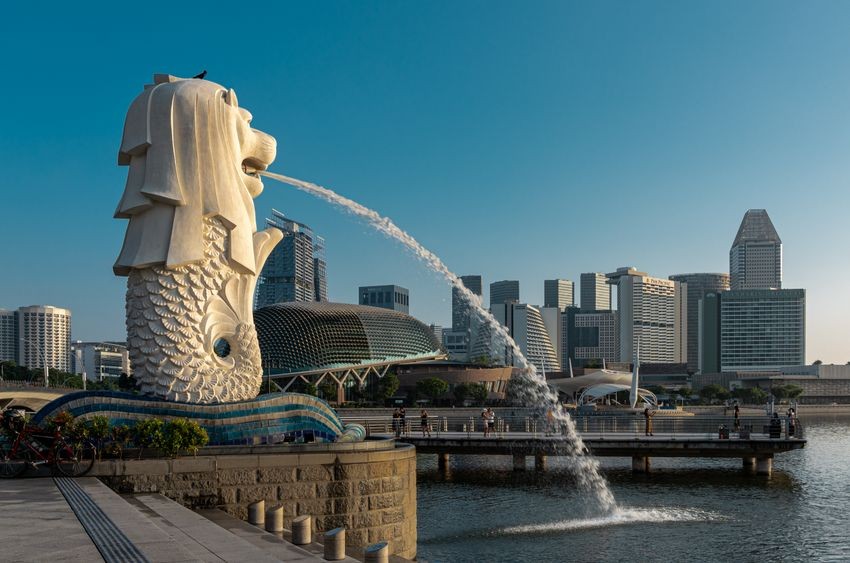
Singapore is the gold standard for ease of incorporation. The entire process is done online through ACRA and takes one to three working days. The regulatory environment is stable, English is the working language of business and government, and the legal system is transparent and predictable.
The complexity comes after incorporation. The Employment Pass, the standard work visa for founders, requires a declared salary of at least S$5,500 per month from January 2025. The EntrePass designed specifically for entrepreneurs, is more accessible in theory but is scrutinised heavily in practice and has a rejection rate that few platforms publish.
Banking is straightforward by regional standards. DBS and OCBC both open accounts for foreign-owned companies within one to two weeks.
Best for: Tech, fintech, regional headquarters, professional services, import/export.
Year one cost: £3,000–£6,500.
3. Portugal
Portugal became one of Europe's most searched destinations for overseas founders after the introduction of the Non-Habitual Resident tax regime, which offered a flat 20% income tax for ten years. That regime was replaced in 2024 by the IFICI programme, which is more targeted and more complex. Many guides still describe the old system; be cautious of anything written before 2024.
Company incorporation via Empresa na Hora is genuinely fast and inexpensive. The mandatory requirement to appoint a TOC, a Técnico Oficial de Contas, Portugal's legally required accountant, is the ongoing cost most guides skip. Expect to pay between €1,200 and €2,400 per year just for this.
The immigration bottleneck is the real constraint. AIMA, Portugal's new immigration authority, is processing residency applications with backlogs of four to eight months. Build this into your timeline.
Best for: Digital businesses, consulting, creatives, entrepreneurs who want EU residency, lifestyle-business founders.
Year one cost: £5,000–£10,000.
4. Georgia
Georgia is the most underrated country on this list. Company registration takes one day and costs under £30. The tax system for qualifying businesses under the Virtual Zone or Small Business status is genuinely among the lowest in the world, 1% on turnover for IT companies exporting services. Banking is easy, with TBC Bank and Bank of Georgia both welcoming foreign founders. Tbilisi has a functioning co-working infrastructure and a growing international founder community.
The caveat is the tax structure. The 1% rate is frequently misrepresented. It applies specifically to Virtual Zone-registered companies in the IT sector providing services to non-Georgian clients. Businesses outside this category are subject to standard Georgian tax rates, which are still competitive but not exceptional.
Best for: Remote tech founders, SaaS, digital agencies, freelancers operating internationally.
Year one cost: £700–£2,000. By far the lowest on this list.
5. Estonia
Estonia's e-Residency programme allows any foreign national to register a company online without ever visiting the country. The digital infrastructure is among the best in the world, and the regulatory environment is clean and predictable. For founders who want an EU-based company managed entirely remotely, Estonia remains the most frictionless option.
The limitation that most guides omit: e-Residency gives you a company, not residency. If you want to physically live and work in Estonia, you need a separate visa or residence permit. The e-Residency company also requires a local registered agent, which adds an ongoing annual cost of €500 to €1,500.
Banking is the most common friction point. Estonian banks, particularly LHV and Swedbank, are cautious about onboarding e-Residents without a genuine business connection to Estonia. Fintech alternatives like Wise Business and Revolut Business work, but traditional banking takes persistence.
Best for: Founders who want an EU legal entity managed remotely. Consultants, digital product businesses, freelancers billing EU clients.
Year one cost: £2,000–£4,500.
6. Mexico
Mexico is overlooked by international founders, despite being the second-largest economy in Latin America, sharing a border with the United States, and having a sophisticated urban business infrastructure in cities like Mexico City, Monterrey, and Guadalajara.
Incorporating as a foreigner is straightforward. An S. de R.L. de C.V., the Mexican equivalent of a limited liability company, can be set up in one to three weeks with the help of a local notary. The near-shoring trend, driven by US companies moving supply chains closer to home, has created significant opportunities for foreign founders in manufacturing, logistics, and professional services.
The operational challenge is bureaucracy. Government processes are slow, translation and notarisation requirements add cost and time, and banking for foreign-owned companies requires patience. Local professional relationships, a good lawyer and a good accountant who know the system are not optional.
Best for: Manufacturing, logistics, professional services, businesses serving US markets, and food and beverage.
Year one cost: £3,500–£9,000 depending on sector and structure.
7. Kenya
Kenya is East Africa's most developed business hub and the entry point for founders looking at the African continent. Nairobi has a functioning startup ecosystem, strong English-language infrastructure, an increasingly sophisticated financial sector, and a government that has actively courted foreign investment under successive administrations.
Company registration through eCitizen takes two to five days. The regulatory environment is improving, though it remains inconsistent; what the law says and what enforcement looks like day-to-day are not always the same thing. Banking is accessible, with both local banks and international institutions operating actively.
The opportunity that most foreign founders underestimate: Kenya's growing middle class, its position as a regional hub for East and Central Africa, and its advanced mobile money infrastructure make it one of the most interesting emerging markets for consumer-facing businesses.
Best for: Fintech, agribusiness, consumer goods, professional services, businesses serving regional African markets.
Year one cost: £2,500–£7,000.
8. Spain
Spain offers EU market access, excellent infrastructure, and a quality of life that makes it one of the most popular relocation destinations for founders globally. The Beckham Law, officially the Special Expatriate Tax Regime, allows qualifying foreign workers to pay a flat 24% tax rate on Spanish income for six years, a significant advantage for high-earning founders.
The setup is more bureaucratic than in Portugal. Company formation requires a notary, bank account, and tax registration, and the process takes two to four weeks. The Autónomo self-employment regime is an option for sole traders but comes with mandatory social security contributions that many founders find unexpectedly high.
The digital nomad visa, introduced in 2023, is specifically designed for remote founders and employees, and has become a popular entry route.
Best for: Lifestyle businesses, consulting, digital businesses, and founders who want EU access with a Southern European base.
Year one cost: £5,000–£12,000.
9. Hong Kong
Hong Kong remains one of the most efficient jurisdictions for company formation in Asia. Incorporation through the Companies Registry takes one to four days online. There is no VAT, capital gains tax, or withholding tax. Corporate tax is 8.25% on the first HK$2 million of assessable profits and 16.5% thereafter, competitive by global standards.
The banking reality is the primary barrier. Traditional banks in Hong Kong require in-person verification, and the process can take four to eight weeks. Build a fintech solution, Statrys, Airwallex, or Neat, as your day-one banking option while traditional banking is processed.
The geopolitical context has changed since 2019. Some founders who previously based their Asian operations in Hong Kong have shifted to Singapore. Both remain excellent jurisdictions; the choice increasingly comes down to which markets you are primarily serving.
Best for: Trading, import/export, regional Asian operations, finance-adjacent businesses.
Year one cost: £2,000–£4,500.
10. Thailand
Thailand rounds out this list as the most accessible Southeast Asian destination for lifestyle-oriented founders. Bangkok is a genuinely world-class city with excellent infrastructure, low cost of living relative to Europe, and a large international founder community.
Foreign business ownership is more restricted in Thailand than elsewhere on this list. The Foreign Business Act limits or prohibits foreign majority ownership in a long list of sectors. The common workaround, a Thai majority shareholder holding shares on behalf of a foreign founder, is legally precarious and frequently flagged by lawyers as high-risk. The Thailand Elite Visa and the Long Term Resident Visa are both viable entry routes for founders.
The Board of Investment promotion programme offers significant benefits, including 100% foreign ownership, tax exemptions, and streamlined work permits for qualifying businesses in promoted sectors, including technology, agriculture, and manufacturing.
Best for: Tourism, hospitality, e-commerce, tech businesses qualifying for BOI promotion, and remote founders using Thailand as a base.
Year one cost: £4,000–£10,000.